Smart Parking based on Car Detection using Deep Learning YOLOv8
DOI:
https://doi.org/10.33387/ijeeic.v2i1.8692Keywords:
Internet of Things, MQTT, Node-RED, Raspberry Pi, YOLOAbstract
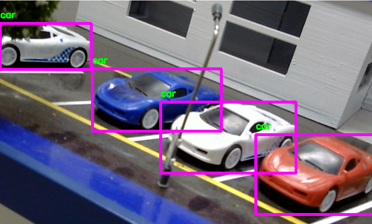
In the context of rapidly growing urbanization, the need for efficient parking management solutions is becoming increasingly urgent. This research develops and implements a car detection system based on YOLOv8 (You Only Look Once Version 8) for smart parking applications using Raspberry Pi and the Node-RED platform. This system is designed to optimize the use of parking spaces and increase parking management efficiency by utilizing YOLO's real-time object detection capabilities. Data processed by the Raspberry Pi is sent to the Node-RED platform for Internet of Things (IoT) via MQTT protocol. Node-RED functions as a management and visualization system, allowing users to monitor parking status in real-time through an intuitive graphical interface. With Node-RED, users can find out which parking lots are full and which areas are still available.
Downloads
References
S. S. Channamallu, S. Kermanshachi, J. M. Rosenberger, and A. Pamidimukkala, “A review of smart parking systems,†in Transportation Research Procedia, Elsevier B.V., 2023, pp. 289–296. doi: 10.1016/j.trpro.2023.11.920.
A. Elomiya, J. Krupka, and S. Jovcic, “A Smart Parking System Using Surveillance Cameras and Fuzzy Logic: A Case Study at Pardubice University’s Campus,†in Procedia Computer Science, Elsevier B.V., 2023, pp. 4881–4890. doi: 10.1016/j.procs.2023.10.488.
W. A. Jabbar, L. Y. Tiew, and N. Y. Ali Shah, “Internet of things enabled parking management system using long range wide area network for smart city,†Internet of Things and Cyber-Physical Systems, vol. 4, pp. 82–98, Jan. 2024, doi: 10.1016/j.iotcps.2023.09.001.
M. S. Nazar, P. Jafarpour, M. Shafie-khah, and J. P. S. Catalão, “Optimal planning of self-healing multi-carriers energy systems considering integration of smart buildings and parking lots energy resources,†Energy, vol. 286, Jan. 2024, doi: 10.1016/j.energy.2023.128674.
O. G. Ajayi, J. Ashi, and B. Guda, “Performance evaluation of YOLO v5 model for automatic crop and weed classification on UAV images,†Smart Agricultural Technology, vol. 5, Oct. 2023, doi: 10.1016/j.atech.2023.100231.
C. Yu and Y. Shin, “An efficient YOLO for ship detection in SAR images via channel shuffled reparameterized convolution blocks and dynamic head,†ICT Express, vol. 10, no. 3, pp. 673–679, Jun. 2024, doi: 10.1016/j.icte.2024.02.007.
T. Bawankule, P. Kalbhor, and A. Kumar Patil, “Smart Car Parking System Using Image Processing,†2024. [Online]. Available: www.ijrpr.com
L. Ortenzi et al., “Automated species classification and counting by deep-sea mobile crawler platforms using YOLO,†Ecol Inform, p. 102788, Aug. 2024, doi: 10.1016/j.ecoinf.2024.102788.
J. Feng and T. Jin, “CEH-YOLO: A composite enhanced YOLO-based model for underwater object detection,†Ecol Inform, vol. 82, Sep. 2024, doi: 10.1016/j.ecoinf.2024.102758.
T. B. Pun, A. Neupane, R. Koech, and K. Walsh, “Detection and counting of root-knot nematodes using YOLO models with mosaic augmentation,†Biosens Bioelectron X, vol. 15, Dec. 2023, doi: 10.1016/j.biosx.2023.100407.
Z. Dai, “Image acquisition technology for unmanned aerial vehicles based on YOLO - Illustrated by the case of wind turbine blade inspection,†Systems and Soft Computing, vol. 6, Dec. 2024, doi: 10.1016/j.sasc.2024.200126.
L. Chen, G. Li, S. Zhang, W. Mao, and M. Zhang, “Journal Pre-proof YOLO-SAG: An improved wildlife object detection algorithm based on YOLOv8n YOLO-SAG: An Improved Wildlife Object Detection Algorithm Based on YOLOv8n,†2024, doi: 10.1016/j.ecoinf.2024.102791.
Y. Liu et al., “Detection method of the seat belt for workers at height based on UAV image and YOLO algorithm,†Array, vol. 22, Jul. 2024, doi: 10.1016/j.array.2024.100340.
A. Baccouche, B. Garcia-Zapirain, Y. Zheng, and A. S. Elmaghraby, “Early detection and classification of abnormality in prior mammograms using image-to-image translation and YOLO techniques,†Comput Methods Programs Biomed, vol. 221, Jun. 2022, doi: 10.1016/j.cmpb.2022.106884.
Z. Liu, Y. Li, F. Shuang, Z. Huang, and R. Wang, “EMB-YOLO: Dataset, method and benchmark for electric meter box defect detection,†Journal of King Saud University - Computer and Information Sciences, vol. 36, no. 2, Feb. 2024, doi: 10.1016/j.jksuci.2024.101936.
N. Aishwarya, K. Manoj Prabhakaran, F. T. Debebe, M. S. S. A. Reddy, and P. Pranavee, “Skin Cancer diagnosis with Yolo Deep Neural Network,†in Procedia Computer Science, Elsevier B.V., 2023, pp. 651–658. doi: 10.1016/j.procs.2023.03.083.
J. Huang, K. Zeng, Z. Zhang, and W. Zhong, “Solar panel defect detection design based on YOLO v5 algorithm,†Heliyon, vol. 9, no. 8, Aug. 2023, doi: 10.1016/j.heliyon.2023.e18826.
Z. Situ et al., “A transfer learning-based YOLO network for sewer defect detection in comparison to classic object detection methods,†Developments in the Built Environment, vol. 15, Oct. 2023, doi: 10.1016/j.dibe.2023.100191.
E. C. Tetila et al., “YOLO performance analysis for real-time detection of soybean pests,†Smart Agricultural Technology, vol. 7, Mar. 2024, doi: 10.1016/j.atech.2024.100405.
Z. Zhao et al., “YOLO-PAI: Real-time handheld call behavior detection algorithm and embedded application,†Signal Process Image Commun, vol. 120, Jan. 2024, doi: 10.1016/j.image.2023.117053.
M. Hussain, “YOLO-v1 to YOLO-v8, the Rise of YOLO and Its Complementary Nature toward Digital Manufacturing and Industrial Defect Detection,†Jul. 01, 2023, Multidisciplinary Digital Publishing Institute (MDPI). doi: 10.3390/machines11070677.
Downloads
Additional Files
Published
How to Cite
Issue
Section
License
Privacy Statement
How the International Journal of Electrical Engineering and Intelligent Computing (IJEEIC) collects, uses, and protects personal data
1. Our Commitment
The names and email addresses entered on this journal site are used exclusively for the stated purposes of this journal and are not made available for any other purpose or to any other party.
This statement explains what personal data IJEEIC collects through its website, why it is collected, and how it is protected. IJEEIC handles personal data in line with Indonesian Law No. 27 of 2022 on Personal Data Protection.
2. Data We Collect
3. How We Use Your Data
- To manage submissions, peer review, editing, and publication of articles.
- To communicate with authors, reviewers, and editors about manuscripts.
- To send journal notifications and announcements that users have subscribed to.
- To publish author names and affiliations with accepted articles.
- To compile anonymous statistics on journal use and readership.
6. Data Retention and Security
- Account data is kept for as long as the account is active, or until the user asks for it to be removed.
- Data related to published articles is kept permanently as part of the scholarly record.
- Access to the editorial system is restricted to authorized editorial staff, and the website is protected with secure connections (HTTPS).
7. Your Rights
- Access and correction: you can view and update your personal details at any time by logging in and editing your profile.
- Deletion: you can ask the editorial office to delete your account and personal data. Data linked to published articles cannot be removed from the scholarly record.
- Unsubscribe: you can stop receiving journal notifications from your profile settings.
8. Contact
Questions or requests about personal data can be sent to:
Editorial Office of IJEEIC
Department of Electrical Engineering, Faculty of Engineering, Universitas Khairun
Jl. Yusuf Abdulrahman No. 53, Gambesi, Ternate, North Maluku, Indonesia
Email: ijeeic.unkhair@gmail.com · Contact page